Why a parked car still needs a policy
A car in the garage can't cause a crash. It can still be stolen, flooded, dented by hail, hit by a falling branch, or wired into a nest by mice. And most states expect any registered car to carry liability insurance whether it moves or not.
Letting that coverage lapse has costs of its own. Some states fine you or suspend the registration, and a gap in your insurance history can raise what you pay later. What a parked car must carry is set by your state, and your quote follows that state's rules.
So yes, you pay, though it shouldn't be what you pay for the car that commutes every weekday.
How the parked-car rate works
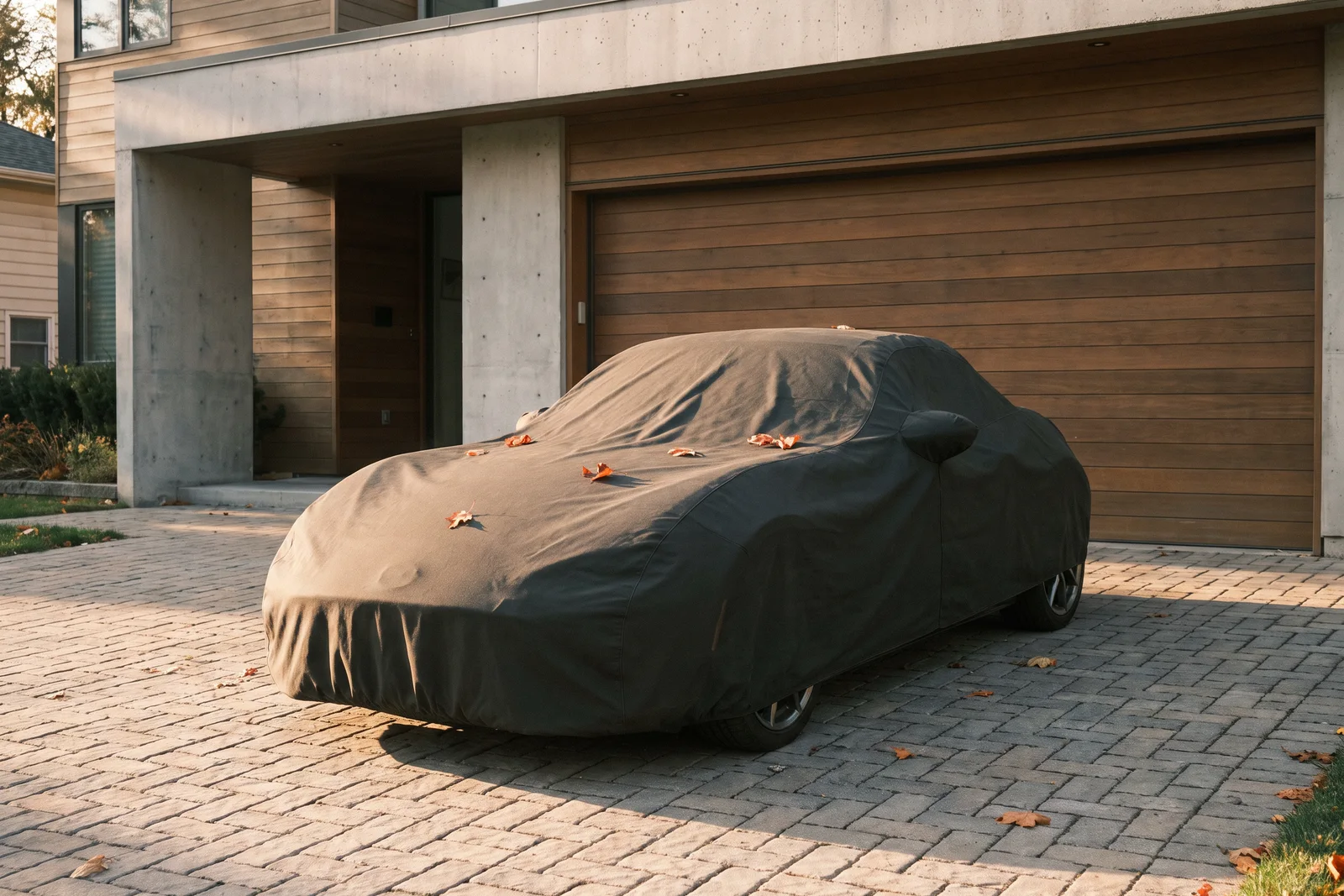
When you get a quote, you tell us how each car is used. There are four uses: daily, weekend, parked, and collector. A parked car is one that sits most of the month. That might be the second car since one of you started working from home, the car waiting for a teenager's license, or the hatchback left behind when your kid went to college.
In our example pricing at the Essential level, each car adds this much to the monthly premium:
- A daily car: $36 a month.
- A weekend car: $22 a month.
- A parked car: $19 a month.
On top of that, each driver adds $30. These are examples for a sample household of two drivers. Your real premium depends on the drivers, the cars, where they are kept, and your state. In the example, the parked car costs about half what the daily car does, and it sits on the same policy as every other car, with one renewal date and one bill.
A parked car can still be driven. The rate assumes it mostly isn't, not that it never is. A trip to the shop, moving it for the snowplow, or a short drive to keep the battery up is ordinary use for a parked car.
Example household, not a quote
Two drivers, a daily car, a weekend car, and a third car
How is the third car used?
- Two drivers
- $60
- Daily car
- $36
- Weekend car
- $22
- Third car, daily
- $36
- Example monthly, Essential
- $154
- Two drivers
- $60
- Daily car
- $36
- Weekend car
- $22
- Third car, weekend
- $22
- Example monthly, Essential
- $140
- Two drivers
- $60
- Daily car
- $36
- Weekend car
- $22
- Third car, parked
- $19
- Example monthly, Essential
- $137
- Two drivers
- $60
- Daily car
- $36
- Weekend car
- $22
- Third car, parked
- $19
- Household level (rental, gap, trip help, roadside), x1.18
- +$25
- Student-away discount
- -$9
- Example monthly, Household
- $153
Example rule from the price builder. Real premiums depend on the drivers, the cars, and the state.
The student-away discount
On Household and Collector there is a second step down. If a student on the policy is away at school and the car they drive stays home, that car gets the student-away discount: in our example pricing, $9 a month off each parked car it applies to.
The student stays on the policy as a driver. When they come home for the summer or a long weekend and take the car out, they are covered, so you don't need to add them back before the holidays.
If they take a car to school, it is no longer parked. It is a daily car in a different place, and if it is registered in another state, it needs a separate policy.
What has to stay on a parked car
Parking a car is not the same as taking all the coverage off it. Two parts matter most.
- Liability. Most states require it on any registered car, and the minimum amount differs by state. Some let you drop it only if you turn in the plates or file a non-use form. We follow your state's rule. Varies by state
- Comprehensive. This pays for what happens to a car that isn't moving: theft, fire, hail, flood, falling trees, vandalism, and animals. For a car in storage, it is the coverage most worth keeping.
Collision matters less on a car that sits. If the car is financed or leased, though, the lender usually requires it, so read the loan papers before you ask us to change it.
When to tell us a car's use changed
Tell us when a car moves from one use to another, in either direction:
- Your kid leaves for school and the car stays home: daily to parked.
- Someone takes a job with a commute: parked to daily.
- A car comes out of winter storage: parked to weekend.
- You buy a car, sell one, or move one to another state.
You can change a car's use in the app or by calling us, and the premium moves from that date. If a car listed as parked is driven every day, the rate is wrong, and that can cause trouble when you file a claim. We would rather change a car's use mid-term than sort it out after a crash.
Policy documents govern. This guide is a plain summary; your policy's own wording decides what is covered.